Self-Initiated Child Marriage in Nepal: Men and Boys Perspectives
Child marriage, either arranged, forced, or self-initiated among girls, is a harmful practice, with negative consequences for the girl herself, her children, her family, and society as a whole (Bhandari, 2025). In Nepal, 34.9 % of women between 20 and 24 had married before the age of 18, and 53.9% are married before 20 years of age, and 5.8% of girls become brides by the age of 15 (Ministry of Health, et al, 2022). Child marriage perpetuates unequal community and family decision-making power, gender gaps in educational achievement and economic independence, and poor reproductive and sexual health (Plan Asia & ICRW, 2013). Furthermore, child marriage is punishable by law in Nepal. A report published almost a one and a half decades ago revealed that 60.4 percent of marriages were determined by parents (Plan Nepal et al., 2012). However, in recent years, the practice of self-initiated marriage by girls and boys themselves has been increasing (JWAS, 2025; JWAS, 2023).
JWAS recently released a research report entitled "Early-Age Self-Initiated Marriage in Nepal" from the perspectives of girls and married women, who entered into marriage by self-initiation. The study report suggests that the practice of self-initiated marriage among early-age girls is increasing rapidly. Furthermore, the research strongly recommends conducting similar research from the perspectives of men and boys:
"This study covered the perspectives of girls and women. However, the findings indicate the influence of gender norms and masculinity in the lives of women who married at an early age through self-initiation. Therefore, this research recommends conducting similar research from the perspectives of boys and men", JWAS (2025). Please copy and paste this link for the full report: https://jwas.org.np/reports/12/
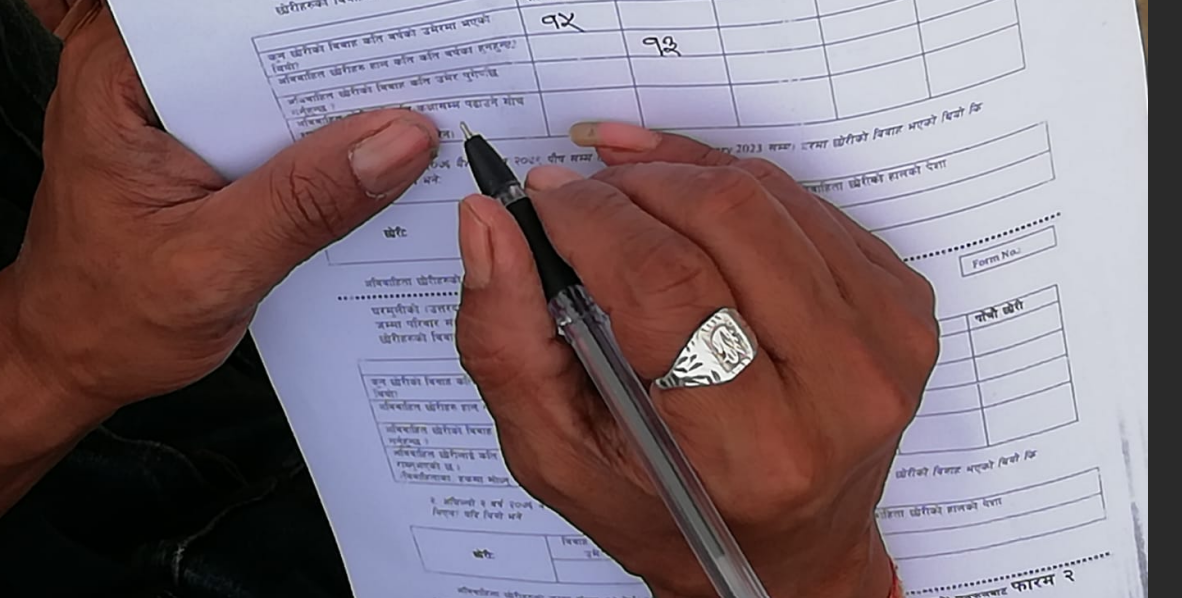
In this context, this ongoing research aims to examine the motivations, causes, and trends of self-initiated child marriage in Nepal from the perspectives of men, boys, and masculinity. This research specifically addresses the following research questions.
● What are the factors that motivate men and boys to enter into marriage with an underage girl through self-initiation?
● What are the underlying causes that drive men and boys to marry underage girls through self-initiation?
● How does the changing digital context nurture boys' interest in marrying young girls through self-initiation?
The project is funded by DKA Austria.