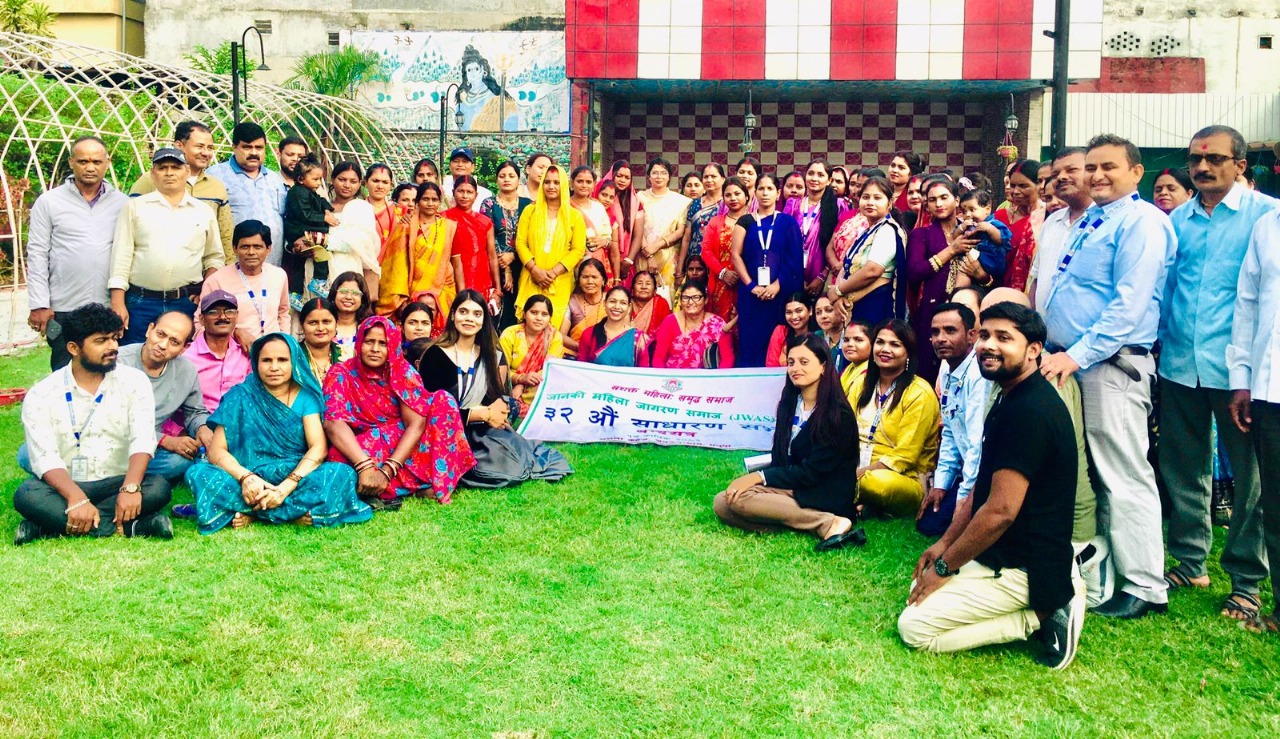
Janaki Women Awareness Society (JWAS) successfully conducted its Annual Review and Planning Meeting for the Fiscal Year 2081/82, making presence of key Board Members, Executive Director, Program Directors, Project Coordinators, and Staff team to review progress, reflect on key learnings, and plan for future programs.
Opening and Outline Setting
The meeting kicked off with Mrs. Manda Kumari Karn, President of JWAS, welcoming remarks and wishing for a successful and productive review and planning session. She mainly highlighted the importance of collaboration and reflective learning, highlighting the positive impact it can have in the community.
Proceed further, Mr. Nub Raj Bhandari, Director–Research and Program, oriented the discussion framework and formed four assessment teams and four evaluators to review each project presentation applying the SWOT analysis method. This method ensured that the presentation and discussion were interactive, evidence-based and in an atmosphere of collective learning.
Furthermore, an innovative self-realization introduction session adopted in the meeting have encouraged participants to reflect on their personal values, experiences, and their linkages to JWAS’s mission; helping foster a more inclusive and self-aware organizational culture.
Projects and Highlights
RECET – Resilience for Women through Climate-smart Economic Transformation
RECET strengthened women’s capacity in climate-smart agriculture, entrepreneurship development, and local advocacy. With the intervention, more than 100 women benefited through biological pesticide training, irrigation facilities, and initiatives on entrepreneurship promotion. Advocacy efforts on LAPA integration as well as SAMVAD leadership training further promoted women-led climate action and resilience.
CS4FS – Civil Society for Nature-based Local Agri-Food Systems
CS4FS-implemented in partnership with Asman Nepal, PAC Nepal, and WHH, advanced regenerative agriculture and food security in three project municipalities. The project has been able to form 200 farmer groups and reached over 5,000 households contributed to the process of sustainable agriculture practices and policy formulation.
Girls Standing Strong (GSS)
GSS project, supported by Plan Nepal, worked to create Child Marriage-Free Municipalities through Early Childhood Development (ECD), parenting sessions, child protection training, and local policy formulation. Through this project, awareness programs have been conducted reaching over 1,300 parents and also empowered adolescent girls through community clubs and peer advocacy process.
She Leads – Life Skills and Livelihood Support for Marginalized Women
Under the Street Child-funds, She Leads is supporting 425 marginalized married women (15–25 years) by establishing 17 learning centers. Key outcomes to mention are; improved decision-making, leadership, and coordination with local governments to sustain women’s empowerment efforts.
YEED – Youth Empowerment and Entrepreneurship Development
YEED’s achievements in promoting youth entrepreneurship and skill development across four municipalities in Dhanusha are mentioned as;
• 58% of participants were women.
• 350 beneficiaries linked with financial institutions.
• 62 women received citizenship certificates.
• Project investment of NPR 3.27 crore generated an income of NPR 4.27 crore, contributing directly to livelihood improvement and reduced migration.
YEEP – Youth Economic Empowerment Project
Building on YEED’s project learning, YEEP worked with 65 youths (56% female), offering vocational training with start-up support. The key priorities were; business development support, and life skill promotion. In this process, 53 participants completed training, while 45 families began investing in youth-led enterprises with significance.
Other Project Updates
Pathways to Gender Responsive Justice (UN Women)
Implemented across six districts of Madhesh Province and extended to Lumbini and Sudurpaschim provinces, the project strengthened access to justice for women and children through policy support, capacitating informal justice actors, gender-responsive budgeting, and establishment of safe and breastfeeding rooms for justice seeking and working mothers.
Electric Stove Promotion (AETC) & Expand Access to Electric Cooking (CCA/SPI Nepal)
These projects aimed at promoting clean energy at rural villages have introduced electric cooking in Ganeshman Charnath Municipality and across 870 households in Madhesh Province, respectively. Going forward with this, over 500 electric stoves were distributed, reducing reliance on firewood and LPG while improving women and children health and increased household efficiency. Frequent power cuts, low voltage, and lack of local repair technicians are seen to be the key challenges, hence emphasizing the need for developing community-based maintenance skills through trained manpower locally.
Life Insurance Awareness Session – MetLife
A brief presentation from MetLife insurance has been done highlighting the importance of life insurance for family security, introducing MetLife’s 158-year legacy and its operations in Nepal since 2001. Participants were encouraged to join its scheme by presenting the various features, schemes and benefits offered for the security of policy holders and their families.
Outcome Harvesting and Admin-Finance Updates
Project and Partnership director, Mr. Sushil Dhakal facilitated a session on outcome harvesting, emphasizing its role in reporting and evidence generation. The session aims to frame outcome statements for annual reports, reporting to donors, and generating strategic evidence for other purposes. Meanwhile, the finance team shared updated procedures on DSA, travel, and advances, introducing new formats and procedures for improved accountability and compliance assurance.
Review, Reflections and Closing
The four assessment teams shared critical overview and insights, led by Mr. Nub Raj Bhandari, enhancing understanding, mutual learning and accountability. The assessment conducted through SWOT in each presentation helped to understand the project from 4 different perspectives. Likewise, evaluators acknowledged the efforts, sincerity and ownership shown by all teams. The evaluators also presented that the assessment team observed and presented their opinions on with equal importance and interest to each presentation. Meanwhile, pre- and post-assessment results across eight performance dimensions were also presented for everyone’s reminder.
In her concluding remarks, Mrs. Manda Kumari Karn, JWAS President thanked all participants, partners, stakeholders and donors for their continued commitment. She openly praised the role and support played by the local government and community in this process. She reflected her personal and organizational growth journey, acknowledging the JWAS’s impact on community empowerment through initiatives like Golden 1000 Days and Life Skills Development, because of which she herself benefitted from the great learning.
Thus, the Review and Planning Meeting was successfully concluded, confirming JWAS’s dedication and commitment to advancing gender equality, girls & youth empowerment, climate action, and inclusive community development and economic empowerment.
Report Generated by:
Sushil Dhakal
Director – Program and Partnership Development, JWAS